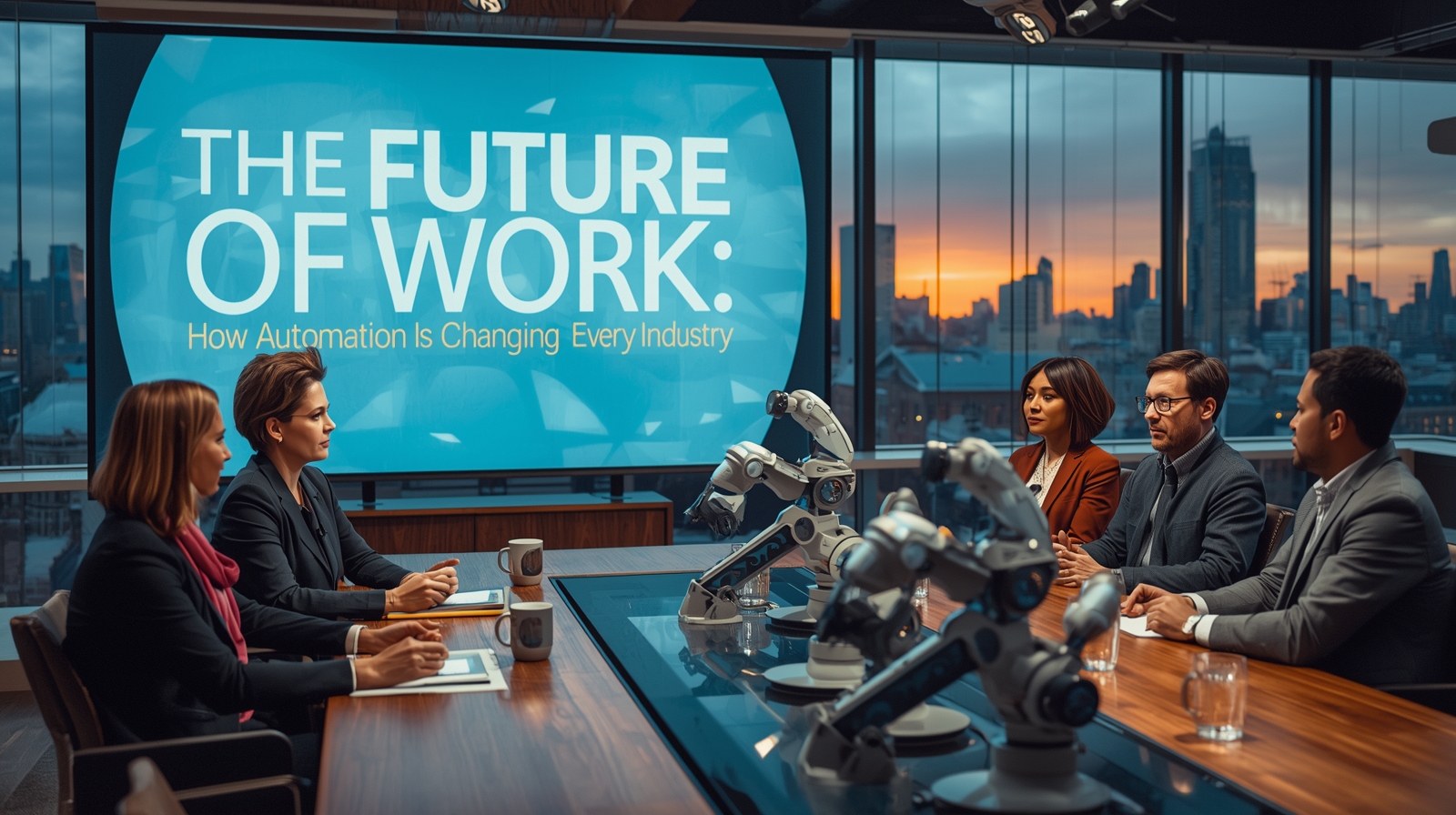
Automation continues to reshape industries and redefine how organizations function. Machines and software systems perform tasks once handled by humans. This transition brings clear operational gains, but it also raises complex ethical questions.
The central issue is balance. Automation creates new efficiencies but alters employment dynamics. It changes workforce demand, decision-making authority, and economic structure. The ethical question lies not in whether automation should exist but in how society integrates it responsibly.
This article explores the ethical dimensions of automation, its impact on employment, the responsibilities of organizations, and strategies for maintaining both productivity and human opportunity.
1. Defining Automation and Its Purpose
Automation is the use of technology to execute processes without continuous human involvement. It is designed to reduce time, cost, and error across industries.
Automation appears in multiple forms:
- Mechanical automation in manufacturing and logistics.
- Digital automation in software and administrative systems.
- Artificial intelligence automation in decision-making and prediction.
The primary purpose is to enhance productivity. However, this pursuit has social consequences that require careful ethical assessment.
2. The Ethical Question of Efficiency
Efficiency has long been a goal of business and industry. It drives profitability, consistency, and competitiveness. Yet automation raises an ethical question: how far should efficiency be pursued when it displaces human labor?
Ethical evaluation involves more than productivity metrics. It includes fairness, access to opportunity, and societal well-being. When automation replaces human work, the efficiency gained by businesses may translate into hardship for workers.
The ethical challenge is determining whether technological efficiency should override employment stability or whether both can coexist through planned adaptation.
3. Historical Context: From Mechanization to Digital Systems
Automation is not new. It has evolved over centuries:
- The Industrial Revolution introduced machines that replaced manual labor in textile and manufacturing sectors.
- The 20th century saw industrial robots and assembly line automation.
- The 21st century introduced digital and artificial intelligence-driven automation.
Each stage improved production and living standards but also disrupted employment. Ethical considerations have grown alongside technological complexity, requiring broader governance and adaptation.
4. The Relationship Between Automation and Employment
Automation changes the type of work humans perform. It rarely eliminates all jobs; it transforms them.
For example:
- Routine data entry can be automated, while analytical roles expand.
- Manufacturing lines can use robots for production but require human oversight, maintenance, and design.
- Logistics automation reduces manual handling but increases demand for technical skills in system management.
The ethical concern is not automation itself but the rate of change and how societies support displaced workers.
5. Economic Benefits and Ethical Costs
Automation provides clear economic benefits:
- Lower operating costs
- Faster production cycles
- Consistent quality control
- Reduced human error
However, ethical costs include:
- Workforce displacement
- Wage inequality between skilled and unskilled workers
- Reduced human agency in decision-making
- Concentration of wealth among technology owners
Balancing these outcomes requires policy and corporate responsibility rather than market forces alone.
6. The Social Contract and Technological Change
Societies operate on an implicit social contract that balances productivity with opportunity. When automation disrupts this balance, the contract weakens.
For instance, automation may increase national wealth but reduce individual job security. Governments and businesses share ethical responsibility to uphold fairness in this transition.
This involves retraining, education, and social protection measures. Ethical automation considers both the efficiency of machines and the dignity of human labor.
7. Corporate Responsibility in Automation
Corporations drive most automation initiatives. Their ethical responsibility extends beyond profit to include employee welfare and community impact.
Responsible companies should:
- Assess human impact before deploying automation.
- Invest in retraining programs to transition workers into new roles.
- Communicate transparently about changes affecting employment.
- Design hybrid models that combine human and automated systems.
- Promote inclusion by ensuring equal access to new opportunities.
Ethical leadership ensures automation benefits the business without neglecting its social footprint.
8. Government and Policy Role
Governments influence how automation affects employment through policy and regulation. Their ethical obligation includes:
- Supporting reskilling programs.
- Regulating labor standards in automated industries.
- Encouraging innovation that complements human labor.
- Creating incentives for companies that maintain fair employment practices.
Automation policy must align economic growth with social protection. It cannot rely solely on market adjustment to resolve labor displacement.
9. Education and Workforce Adaptation
Education plays a central role in balancing automation and employment. Workers need skills suited to an automated environment.
Key approaches include:
- Updating school curricula to include technical and analytical skills.
- Expanding vocational training in automation maintenance and programming.
- Promoting lifelong learning to ensure adaptability.
- Partnering with private sectors for skill certification programs.
Ethical automation requires continuous learning frameworks that give workers equal access to the evolving labor market.
10. Human Dignity and Meaningful Work
Employment provides not only income but identity, purpose, and social connection. Automation threatens this foundation when it eliminates human participation in productive activities.
Ethically, organizations must preserve meaningful work. Even as machines handle repetitive tasks, humans should remain central to creative, strategic, and interpersonal functions.
Automation should not devalue human contribution but reposition it within new structures of collaboration.
11. The Risk of Inequality
Automation tends to benefit those with capital, education, and technical access. This widens the gap between groups who adapt quickly and those who cannot.
Without intervention, automation can increase income inequality and social division. Ethical management requires redistributing benefits through education, inclusive employment, and fair taxation systems that support displaced workers.
12. Case Study: Manufacturing Sector
In manufacturing, automation has transformed assembly and production. Robots perform tasks with precision and speed, reducing labor requirements.
However, automation has also created new roles in engineering, programming, and system maintenance. Ethical management involves retraining assembly workers for these new functions.
When automation is introduced responsibly, it enhances productivity while maintaining employment through skill transition.
13. Case Study: Service Industry
Automation in services includes chatbots, scheduling systems, and data management tools. These systems reduce response time and operational costs.
Ethically, businesses must ensure customers still have access to human support when needed and that employees affected by automation are offered alternative opportunities.
Service automation should aim to enhance human efficiency, not eliminate it.
14. Case Study: Logistics and Transportation
Automated logistics systems use robots, sensors, and predictive analytics to manage inventory and delivery. Self-driving vehicles and drones represent the next step.
While these technologies increase speed and reduce operational expense, they also impact employment for drivers and warehouse workers.
Ethical application requires creating alternative roles in oversight, safety monitoring, and technical maintenance. The transition must include worker participation and skill transfer programs.
15. The Role of Artificial Intelligence in Automation Ethics
AI extends automation from mechanical execution to decision-making. This raises new ethical concerns:
- Accountability: Who is responsible when an automated system makes an error?
- Bias: AI systems may replicate discrimination present in data.
- Transparency: Automated decisions must remain explainable and auditable.
Ethical AI governance includes oversight frameworks, clear accountability rules, and human validation in high-impact decisions.
16. Balancing Automation with Human Oversight
Automation should complement, not replace, human judgment. Systems operate best when humans supervise outputs, interpret results, and make contextual decisions.
This hybrid approach maintains both efficiency and ethical accountability. Humans ensure that technology aligns with moral standards, regulations, and community interests.
17. Global Implications of Automation
Automation affects global employment distribution. Low-cost labor markets may lose competitiveness when developed economies automate production.
Ethical global policy should support international cooperation in technology sharing, workforce education, and fair trade adjustments. Automation should raise global productivity without creating unequal labor displacement across regions.
18. Environmental Ethics and Automation
Automation can reduce waste and energy use, but the production of machines and software consumes resources. Ethical automation includes evaluating environmental impact throughout its lifecycle.
Businesses should integrate sustainability with automation strategies by using renewable energy, recycling materials, and designing long-lasting equipment.
19. Cultural Attitudes Toward Work and Automation
Different societies view automation through distinct cultural lenses. Some emphasize technological advancement, while others focus on job preservation.
Ethical balance depends on aligning automation with cultural values. Policies must reflect how each community defines fairness, labor dignity, and social well-being.
20. Preparing for the Future Workforce
The future workforce will operate alongside machines and AI systems. Preparing for this environment requires collaboration between governments, businesses, and educational institutions.
Key initiatives include:
- Developing technical and critical-thinking skills early in education.
- Promoting interdisciplinary programs combining technology, ethics, and management.
- Encouraging businesses to design automation systems that enhance, not replace, human capabilities.
A proactive approach ensures automation serves society rather than disrupts it.
21. Measuring Ethical Impact
Ethical impact can be measured using indicators such as:
- Employment transition rates after automation.
- Training and reskilling participation.
- Wage equity between automated and non-automated sectors.
- Employee satisfaction in hybrid workplaces.
- Public trust in automation governance.
Regular reporting ensures accountability and demonstrates commitment to balanced progress.
22. Legal and Regulatory Considerations
Laws and regulations must adapt to automation’s challenges. Areas requiring attention include:
- Liability for automated decisions.
- Data privacy in AI-driven systems.
- Workplace safety in automated environments.
- Employment rights during technological transition.
Ethical governance combines legal structure with voluntary corporate responsibility. Together, they maintain public confidence in automation systems.
23. Public Perception and Communication
Transparency shapes how the public perceives automation. When organizations communicate clearly about purpose, benefits, and risks, they build trust.
Open discussion about automation’s role in society helps reduce fear and misunderstanding. Ethical communication emphasizes inclusion and shared benefit rather than secrecy or unilateral decision-making.
24. Toward Human-Centered Automation
Human-centered automation focuses on designing systems that assist rather than replace. This approach ensures:
- Humans retain decision authority.
- Systems adapt to human needs.
- Workers remain engaged and productive.
Ethical automation respects human presence within the system, ensuring that efficiency does not come at the cost of participation.
25. Ethical Framework for Businesses
Businesses can follow an ethical framework for automation based on five principles:
- Transparency: Communicate openly about automation objectives.
- Accountability: Define responsibility for system actions.
- Fairness: Protect workers and promote retraining.
- Sustainability: Consider environmental and social impact.
- Human Priority: Maintain roles that require empathy and judgment.
Following this framework ensures automation supports both efficiency and equity.
26. The Role of Stakeholders
Stakeholders—employees, management, investors, and communities—must all contribute to ethical automation.
- Employees provide feedback on process changes.
- Management ensures alignment between goals and ethics.
- Investors encourage sustainable returns rather than short-term cost cuts.
- Communities influence accountability through social dialogue.
Shared responsibility builds trust in automation’s role across society.
27. Future Ethical Challenges
Future challenges include:
- Algorithmic control of labor scheduling.
- Machine decision-making in public services.
- Autonomous systems managing financial or health data.
- Ownership concentration in AI-driven economies.
Ethical frameworks must evolve as these technologies expand. Continuous review ensures that automation remains a tool for collective benefit.
28. Balancing Innovation and Inclusion
Innovation drives economic growth, but inclusion ensures shared prosperity. Ethical automation integrates both by:
- Encouraging innovation that supports human collaboration.
- Prioritizing training and accessibility.
- Ensuring equal opportunity participation in new economic sectors.
Inclusion prevents automation from becoming a dividing force within society.
29. The Long-Term View
In the long term, automation can create more opportunities than it displaces if managed responsibly. Ethical governance ensures that efficiency supports human welfare.
Automation’s value lies in its capacity to extend productivity while maintaining dignity and equality in the workforce.
Conclusion
Automation continues to redefine how businesses and societies function. Its capacity to enhance efficiency is undeniable, but its ethical implications require deliberate management.
Balancing efficiency and employment means designing systems that value human contribution while embracing technological progress. Governments, organizations, and individuals share responsibility for ensuring automation strengthens, rather than divides, communities.
The ethics of automation call for action guided by fairness, transparency, and respect for human work. When applied responsibly, automation becomes not a threat but a foundation for inclusive and sustainable progress.